Beatboxers

My Contributions:

1. Fighter-First Rhythm Rules

Kept rhythm meaningful without making beat timing a condition for basic fighting actions.
Result: Missing a beat no longer prevented movement or attack; on-beat actions still earned a bonus.
Problem: The hybrid’s identity was unclear, and beat-dependent actions added timing decisions to basic combat.
Solution: Make rhythm a bonus layer: actions remain available at any time, with a reward for acting on the beat.
Here is my process:
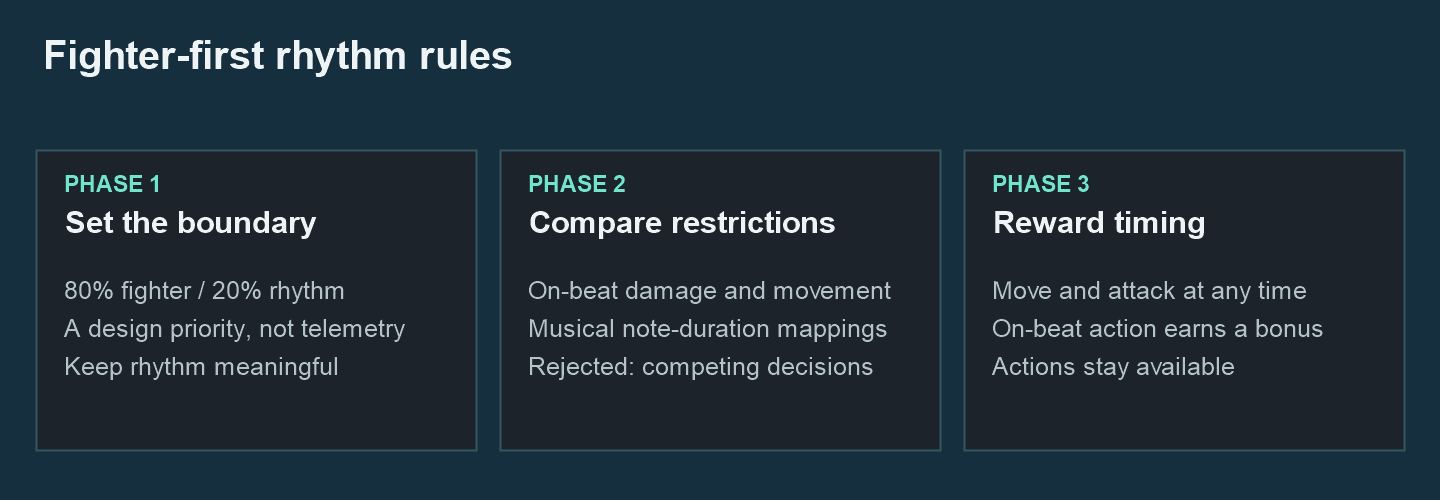
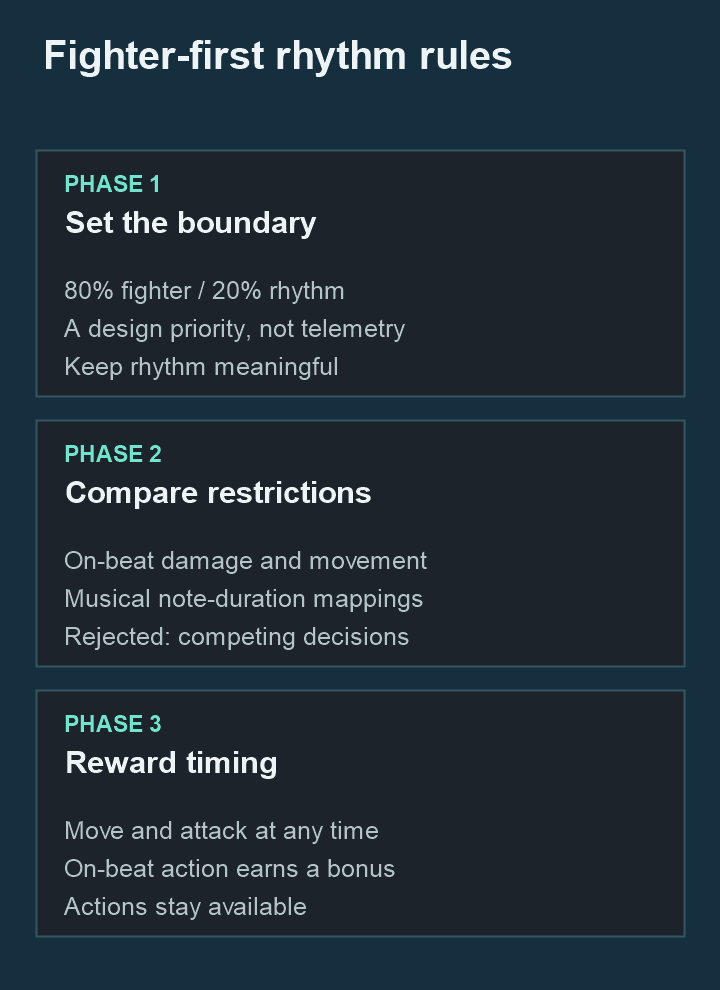
Three rhythm-rule decisions: set a fighter-first boundary, compare action restrictions, and reward on-beat timing while keeping actions available.
(3 phases; full breakdown below)
Phase 1: Set a boundary for rhythm

We chose an 80% fighter, 20% rhythm direction. That gave fighting priority while keeping the team’s “Better on the Beat” pillar relevant.

Rhythm needed to add something to the fight without determining whether every basic action could work.

Phase 2: Reject restrictions on basic actions

We explored three ways to make rhythm a stronger requirement:

AlternativeAdded decisionTradeoff
Damage only on the beatTime the attack as well as choose it.An attack outside the beat could not deal damage.
Movement only on the beatMeet a timing condition to move.The rhythm rule constrained when the player could respond to the fight.
Map attacks to note durationsManage musical-duration mappings alongside combat choices.Added decision complexity to the fighter-first design.

These approaches made rhythm compete with basic fighting decisions. We needed beat timing to reward the player without becoming a condition for every action.

Phase 3: Reward timing instead of requiring it

The chosen rules allowed actions at any time and gave a bonus for acting on the beat. Missing the rhythm did not remove the ability to move or attack.

This preserved the fighter-first priority while giving timing a benefit.

2. Audience Approval & Performance Feedback

Made combat feedback express the battle for an audience’s approval.
Result: The progress display framed success as winning audience approval rather than depleting an opponent’s health.
Problem: The battle-of-the-bands premise centered on winning an audience, while a conventional health metaphor framed progress as surviving damage.
Solution: Represent progress as audience approval and reinforce that framing through the camera’s relationship to the crowd and audible cheers.
Here is my process:
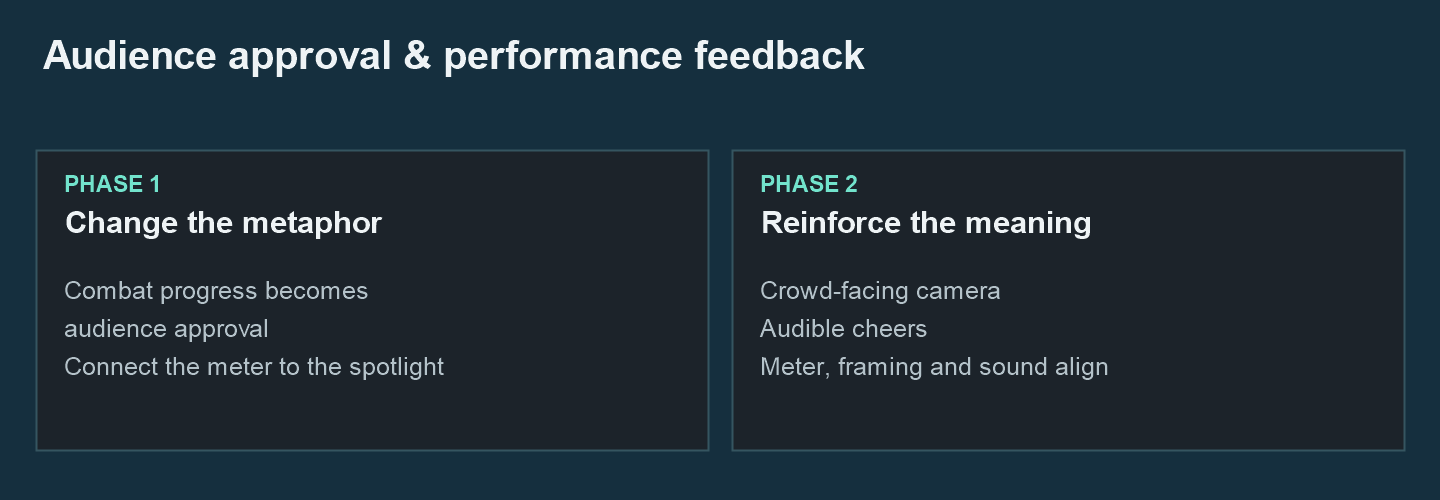
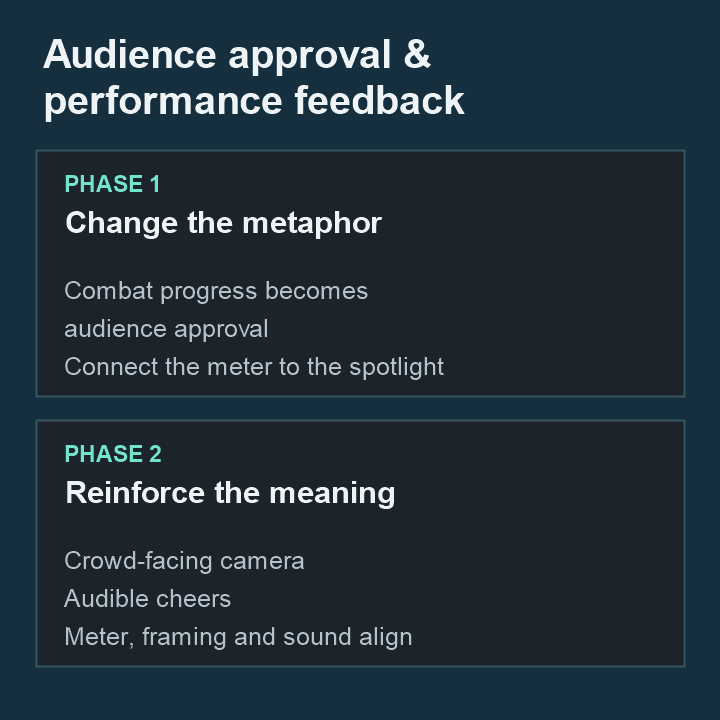
Two audience-feedback decisions: make audience approval the combat progress metaphor, then reinforce it through the crowd-facing camera and cheers.
(2 phases; full breakdown below)
Phase 1: Make the audience the progress metaphor

We replaced the conventional health metaphor with audience approval. The progress display could then express the same contest as the premise: winning over the crowd.

This changed the meaning of combat feedback without introducing a separate objective disconnected from the fight.

Phase 2: Reinforce approval through presentation

The crowd-facing camera and cheers connected fighting actions to the performance setting. The meter showed approval, while the framing and sound kept the audience’s response present in the fight.

I playtested and directed polish and feel toward the project goals. The meter, camera and sound choices were team decisions.