Added decision complexity to the fighter-first design.
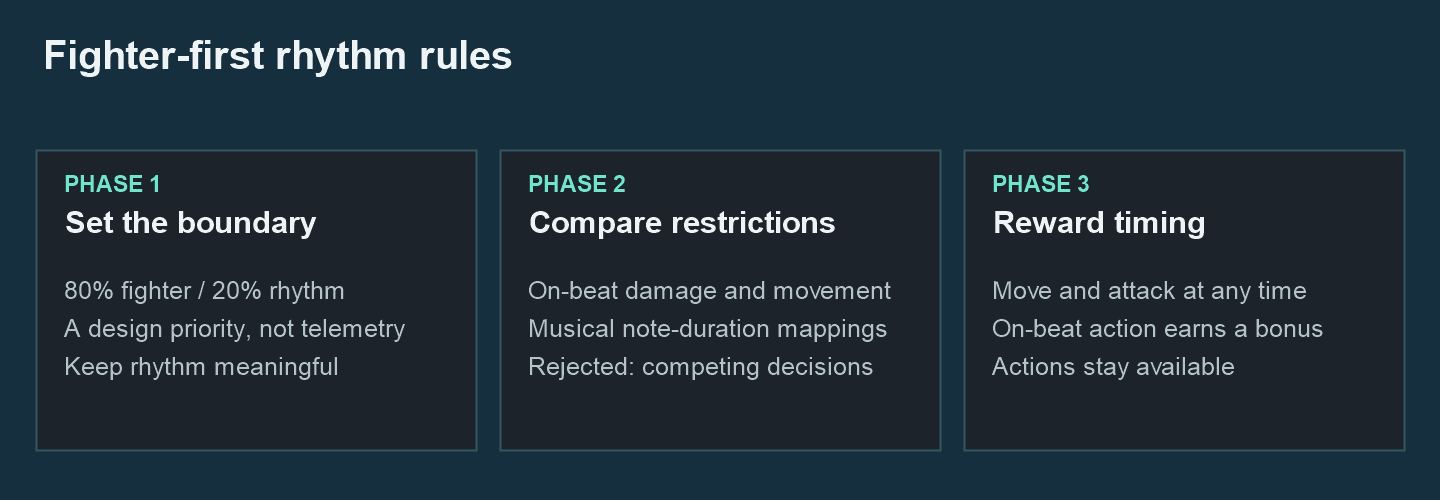
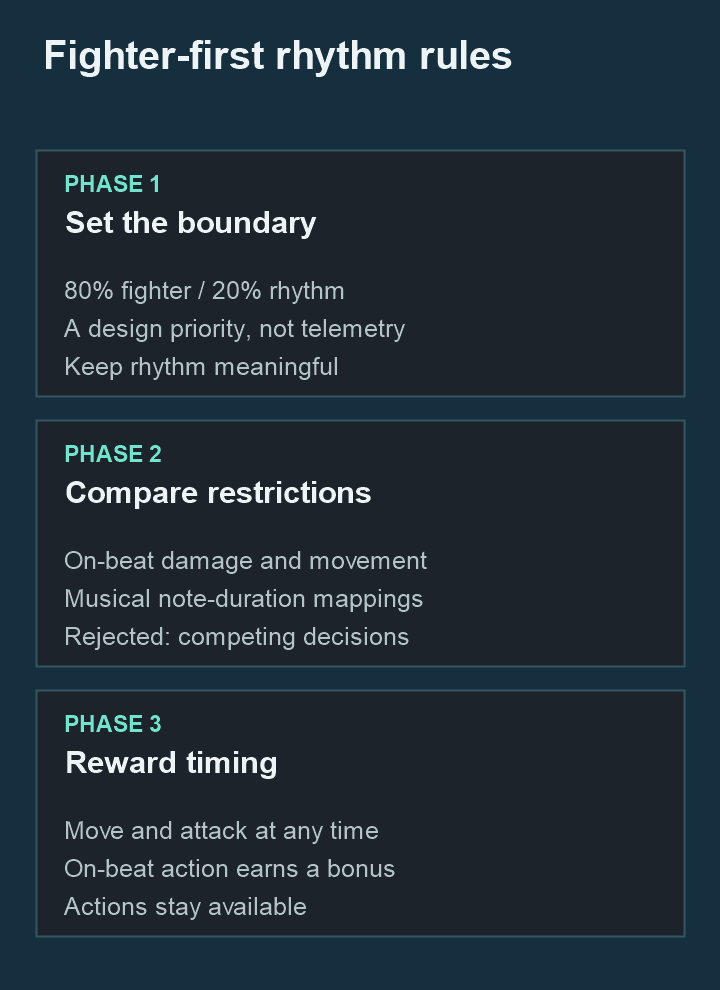
These approaches made rhythm compete with basic fighting decisions. We needed beat timing to reward the player without becoming a condition for every action.
Phase 3: Reward timing instead of requiring it
The chosen rules allowed actions at any time and gave a bonus for acting on the beat. Missing the rhythm did not remove the ability to move or attack.
This preserved the fighter-first priority while giving timing a benefit.
2. Audience Approval & Performance Feedback
Made combat feedback express the battle for an audience’s approval.
Result: The progress display framed success as winning audience approval rather than depleting an opponent’s health.
Problem: The battle-of-the-bands premise centered on winning an audience, while a conventional health metaphor framed progress as surviving damage.
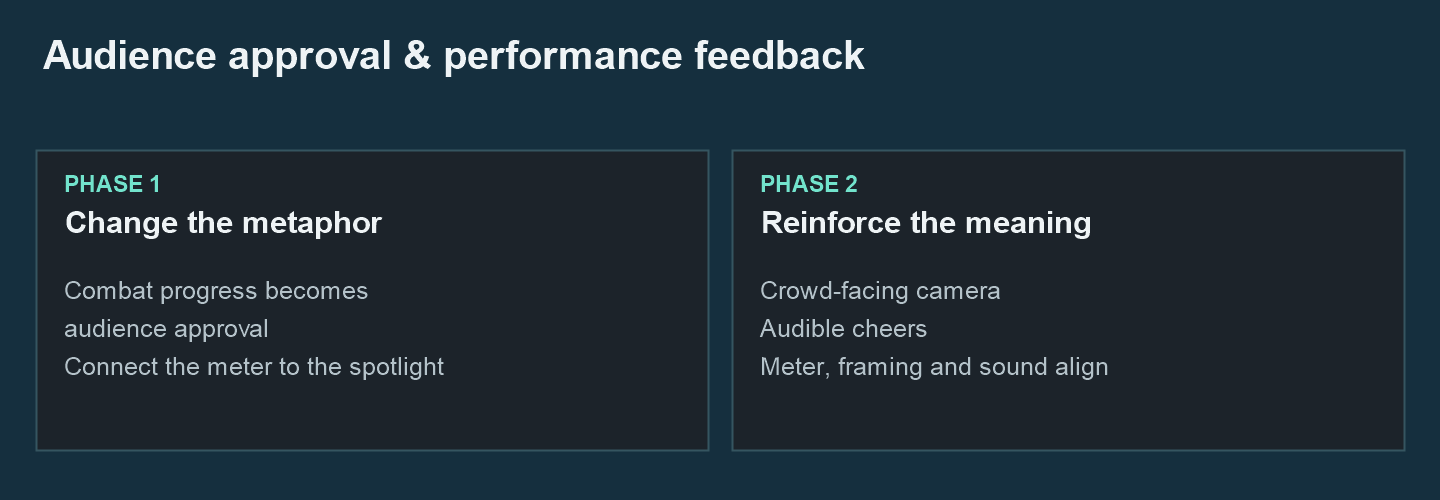
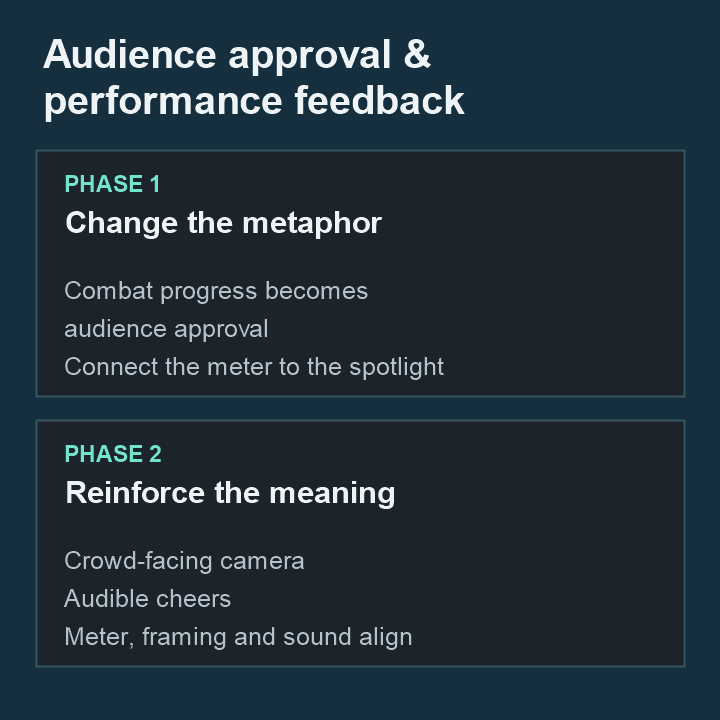
Solution: Represent progress as audience approval and reinforce that framing through the camera’s relationship to the crowd and audible cheers.
Here is my process:
(2 phases; full breakdown below)
Phase 1: Make the audience the progress metaphor
We replaced the conventional health metaphor with audience approval. The progress display could then express the same contest as the premise: winning over the crowd.
This changed the meaning of combat feedback without introducing a separate objective disconnected from the fight.
Phase 2: Reinforce approval through presentation
The crowd-facing camera and cheers connected fighting actions to the performance setting. The meter showed approval, while the framing and sound kept the audience’s response present in the fight.
I playtested and directed polish and feel toward the project goals. The meter, camera and sound choices were team decisions.