Iterated on a VR sling that retained physical throwing while correcting small timing and aiming errors.
Result: Reduced new players’ time to sling competency from roughly 20–30 minutes to about 8 minutes.
Problem: Players struggled to aim a physics-based sling without the weight of a real stone. Even with the correct technique, throws often fell short or missed to either side.
Solution: Keep the physical motion, correct release timing and trajectory within a limited threshold, and use the projectile trail to help players improve their next throw.
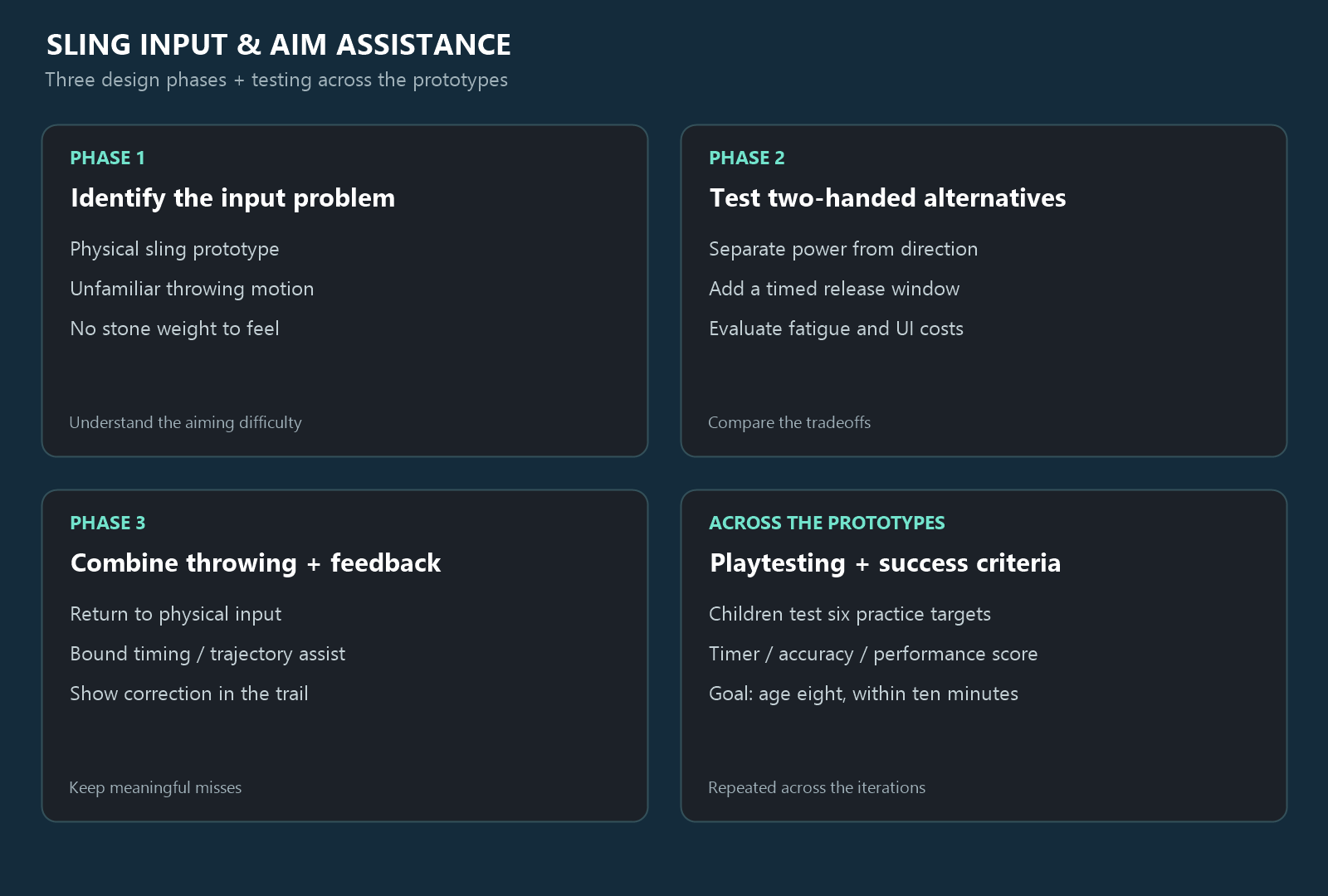
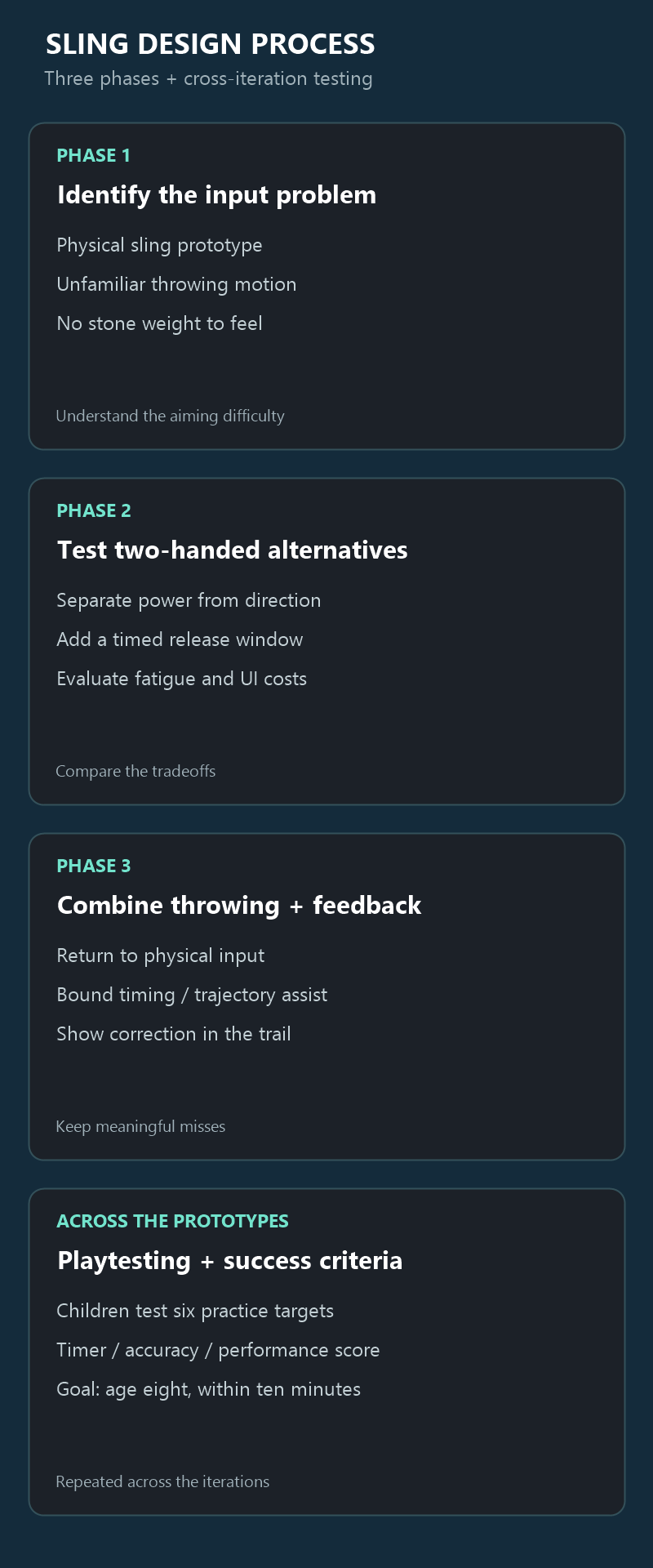
Here is my process:
(3 phases; full breakdown below)
Phase 1: Identify the input problem
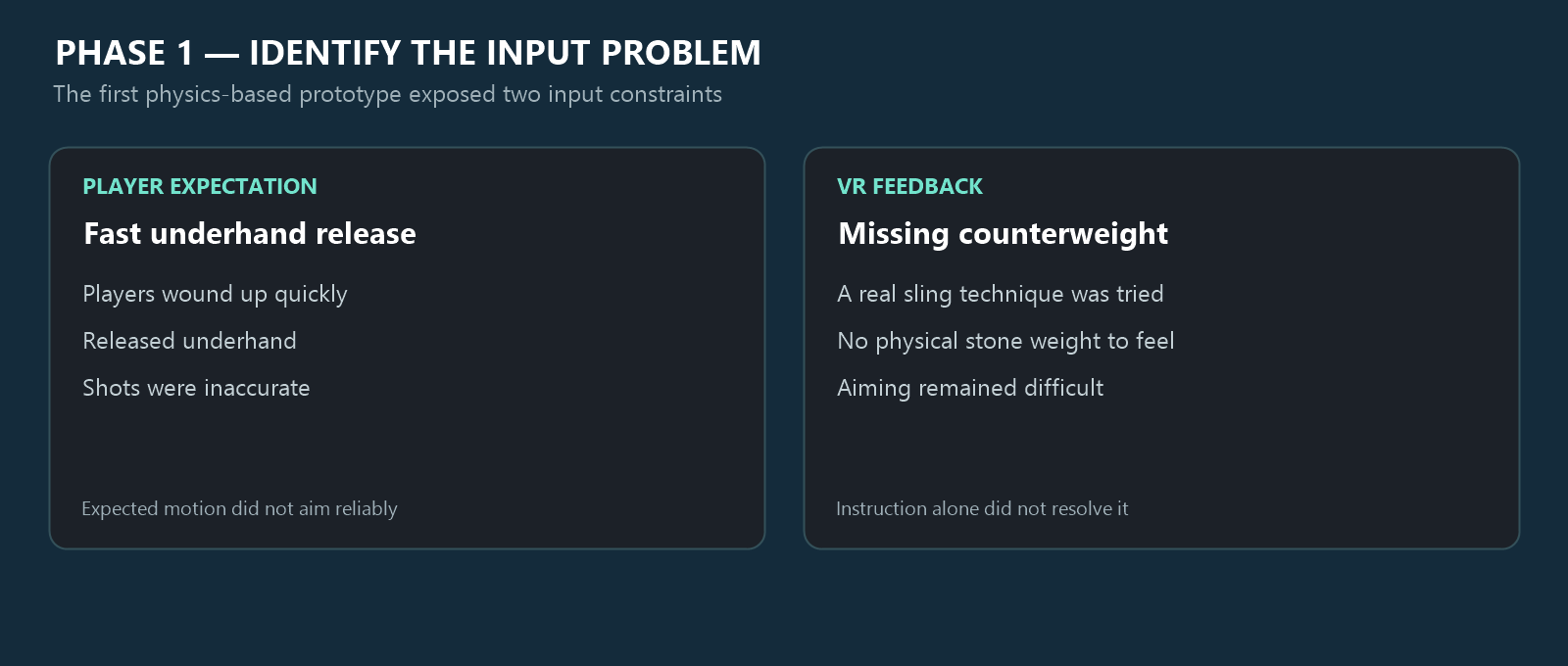
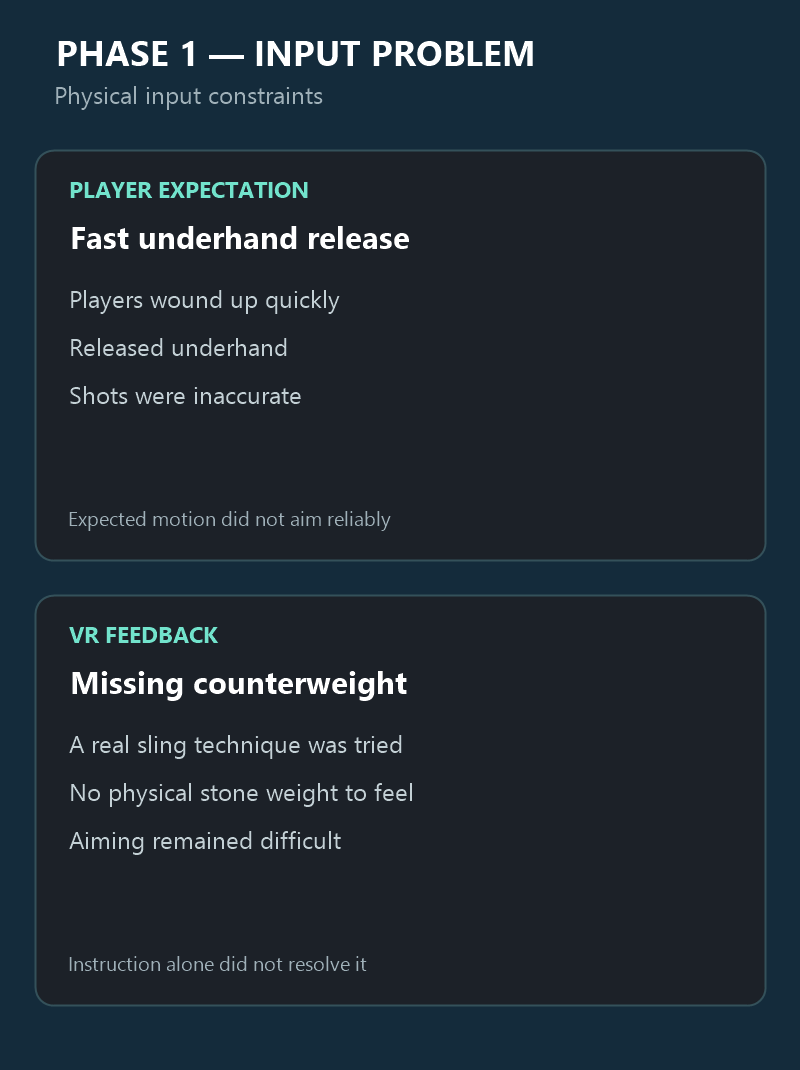
I pitched a purely physics-based sling. In early tests, players wound it up quickly and released underhand, producing inaccurate shots. We tried a real sling technique, but aiming remained difficult without the physical counterweight of a stone.
The design had to account for both the motion players expected and the feedback a VR controller could provide.
Playtesting and success criteria
We playtested the prototypes with young children across iterations in a six-target practice range. Competency meant clearing all six targets. A timer, accuracy percentage and performance score helped us assess each iteration. Our success criterion was for an eight-year-old to learn the sling and clear the range within ten minutes. After learning the controls, repeat runs took about one to two minutes.
Phase 2: Test two-handed alternatives
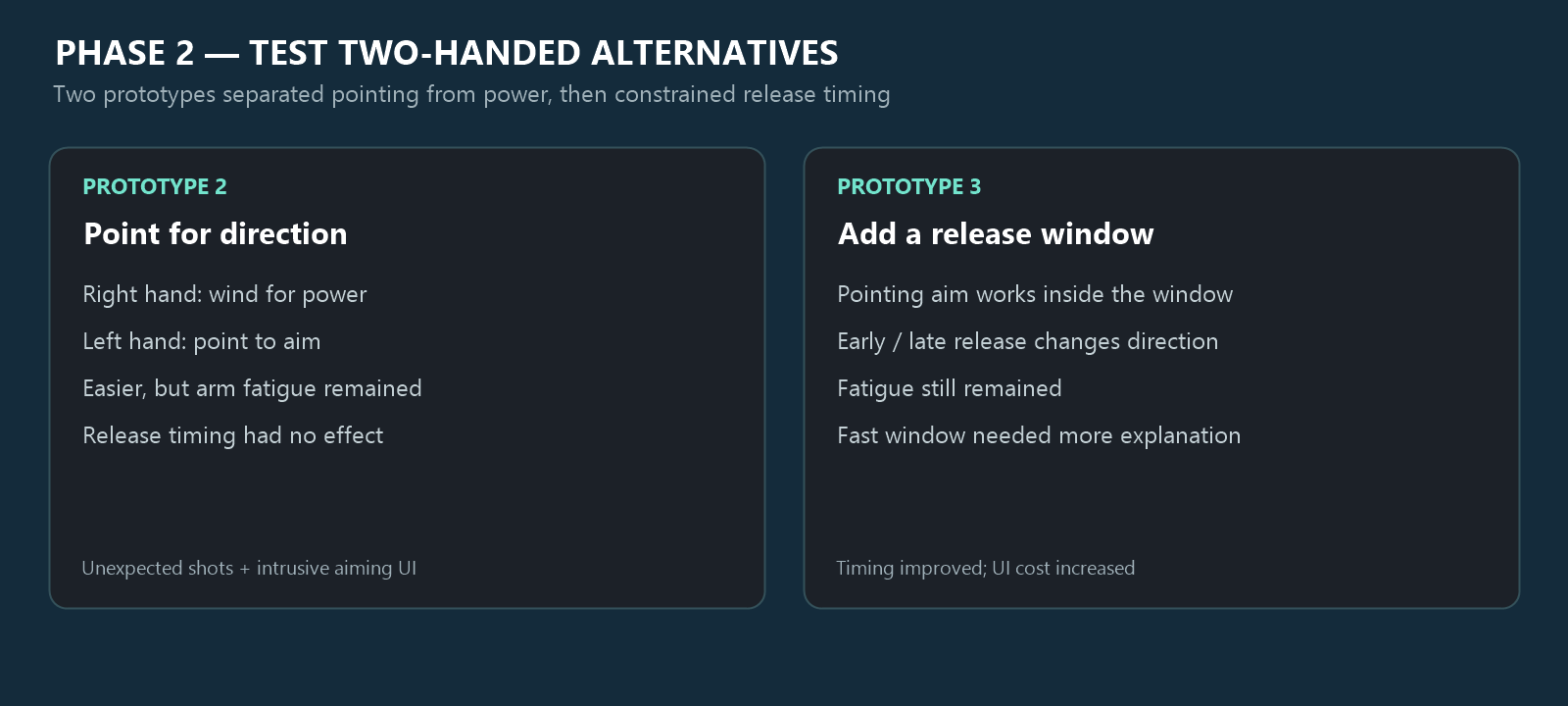
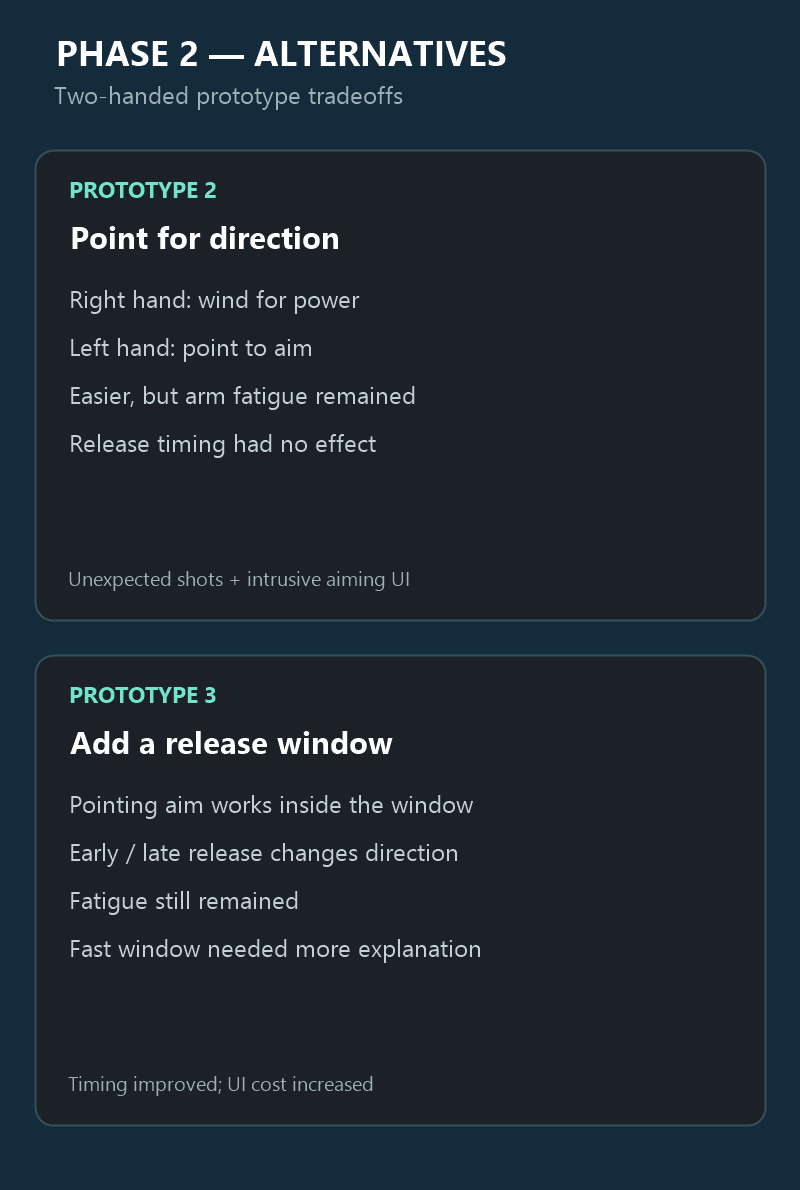
Our second prototype separated power from direction: the right hand wound the sling, while the left hand pointed toward the target. It was easier to use, but holding the pointing arm up caused fatigue. Release timing no longer mattered, and a lowered or mispositioned hand sent shots in unexpected directions. Explaining the mechanic also required intrusive aiming UI.
For the third prototype, we added a release window. The pointing hand only controlled direction when the rock was released during the correct part of its rotation. This addressed timing and direction, but fatigue remained. Conveying a brief window on a rapidly spinning rock made the UI problem worse.
Phase 3: Combine physical throwing with feedback
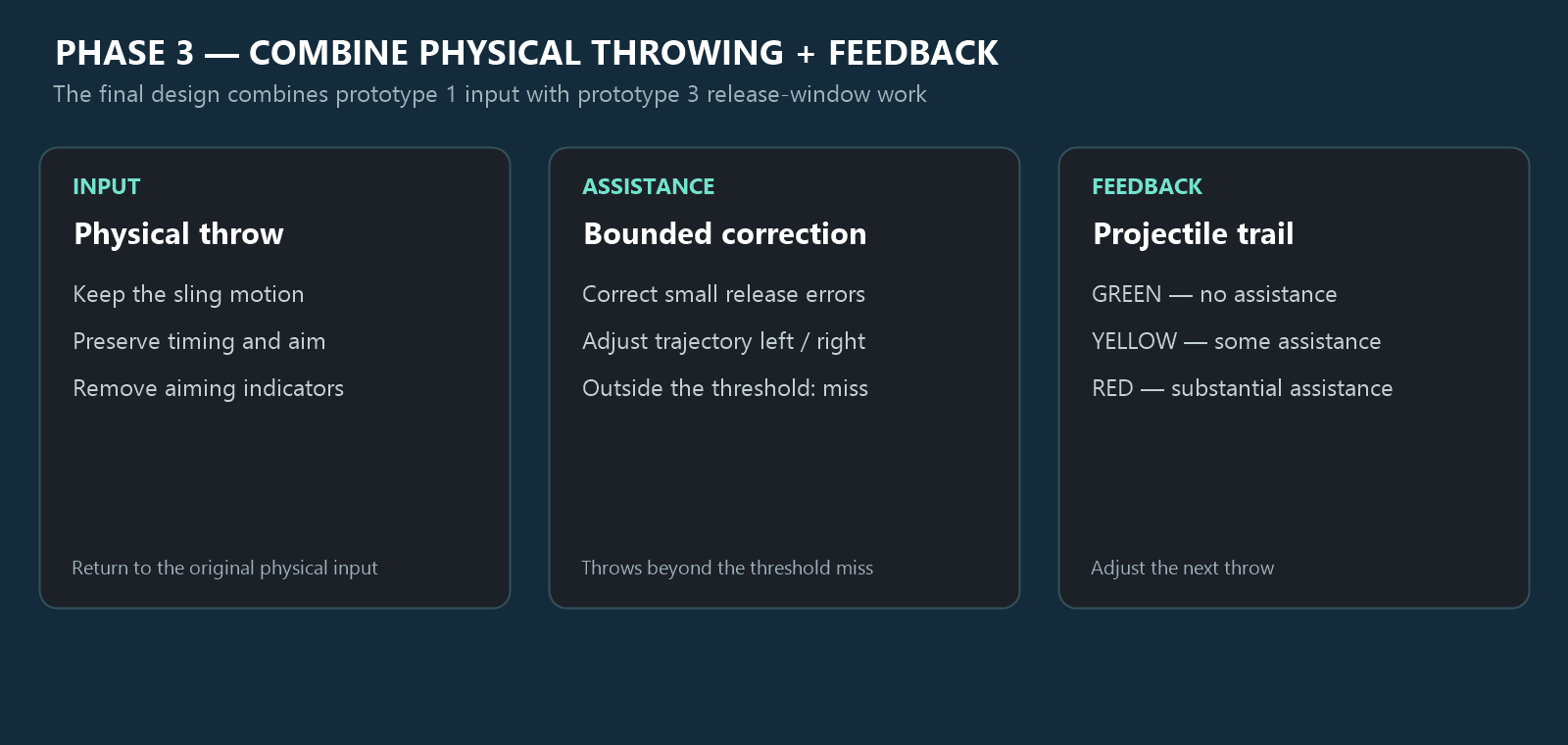
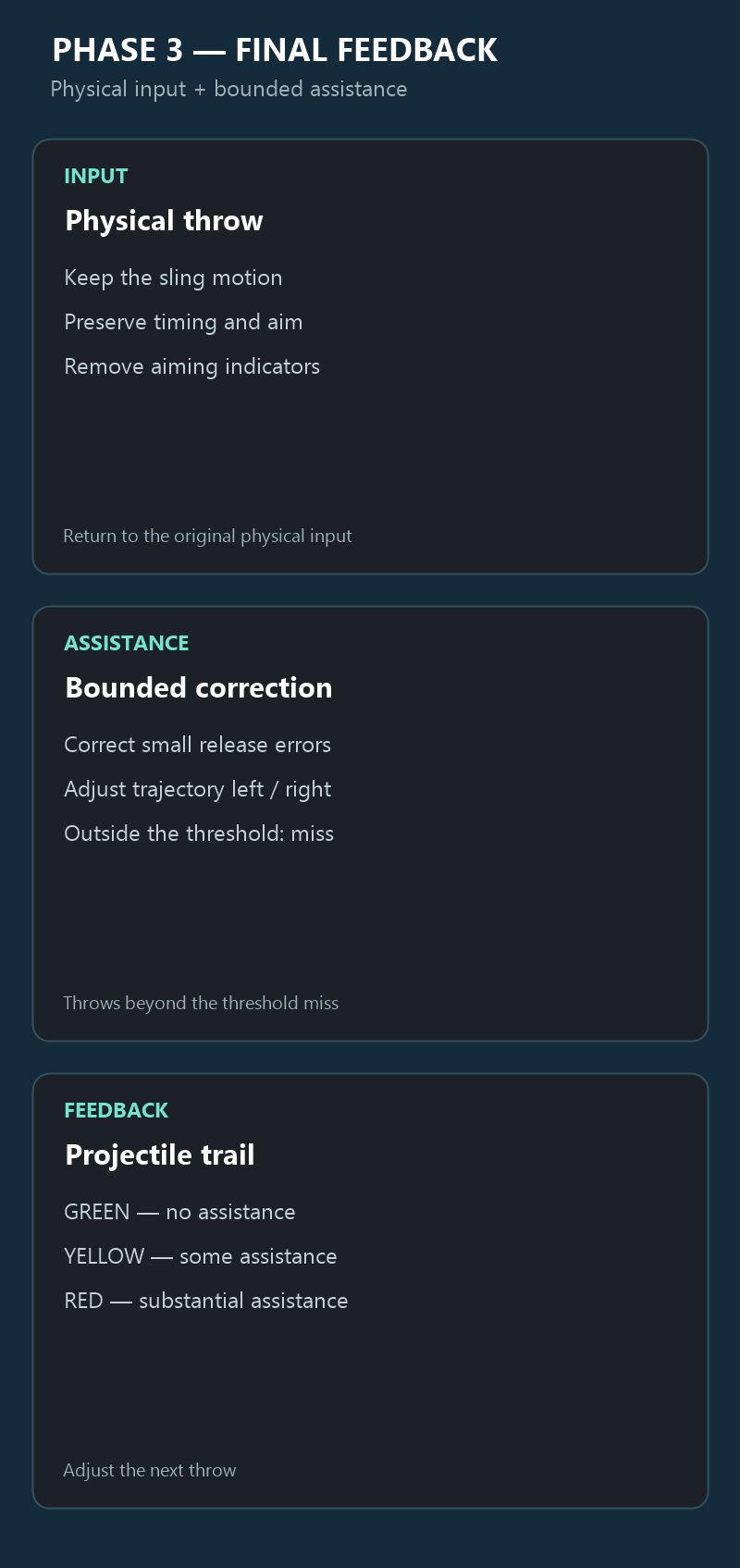
We returned to the first prototype because its timing and trajectory errors could be addressed with assistance. The two-handed alternatives still required a tiring pointing pose and additional aiming UI. We reused the release-window work from the third prototype. Aim assist corrected slightly early or late releases and adjusted trajectories to either side. Throws outside the assistance threshold still missed.
We removed the aiming indicators and put feedback in the projectile trail:
Green: no assistance.
Yellow: some assistance.
Red: substantial assistance.
Players could adjust their next throw and work toward unassisted hits.
2. Making Goliath’s One-Shot Defeat an Earned Victory
Kept the iconic single-shot finish while making the opportunity to land it something the player had to earn.
Result: Preserved the single-shot finish while preventing an incidental headshot from ending the fight.
Problem: Goliath’s defeat by a single stone was central to the source material, but translating it directly into gameplay left the final boss vulnerable to an immediate or accidental win.
Solution: Require players to dismantle Goliath’s defenses before creating a brief opportunity for the finishing shot.
Here is my process:
(3 phases; full breakdown below)
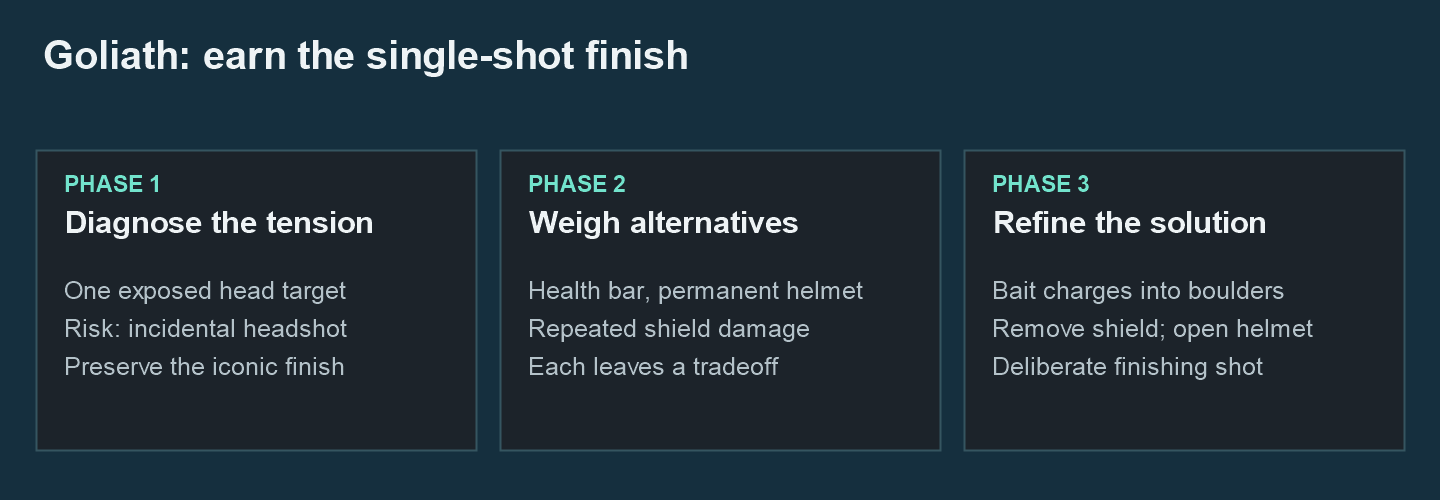
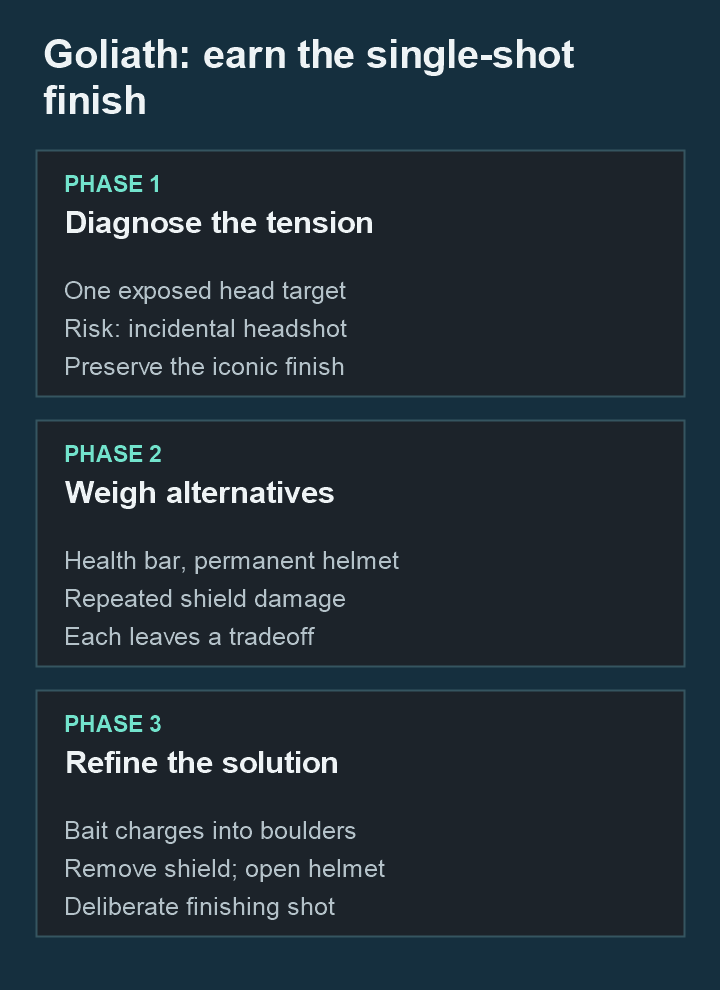
Phase 1: Identify the cause of the problem
The source material made a headshot central to Goliath’s defeat. Translating that directly into a single exposed target could end the final encounter before the player engaged with its challenge.
Aim assist added another risk: a headshot could happen incidentally. The tension was preserving the iconic killing shot while requiring deliberate play to reach it. Extending the fight alone would not resolve that tension if the earlier actions had little connection to the finish.
Phase 2: Brainstorm and evaluate alternatives
We considered ways to extend the encounter or protect the headshot. Each addressed part of the problem, but introduced a tradeoff:
Alternative
What it addressed
Why it was insufficient
Health bar with a headshot finish
Required damage before the decisive shot.
The earlier damage felt disconnected from the finish; keeping a final headshot requirement did not make that damage meaningful.
Helmet removed permanently by a head hit
Prevented the first head hit from being lethal.
Two accidental head hits could still produce a victory; the first left the head exposed indefinitely.
Shield health reduced by repeated shots
Required removal of a defense before the finish.
Grinding shield health repeated the shooting interaction instead of making defense removal a meaningful challenge.
We needed a defense that required a different action to remove and an opening that called for a deliberate follow-up shot.
Phase 3: Prototype and refine the combined solution
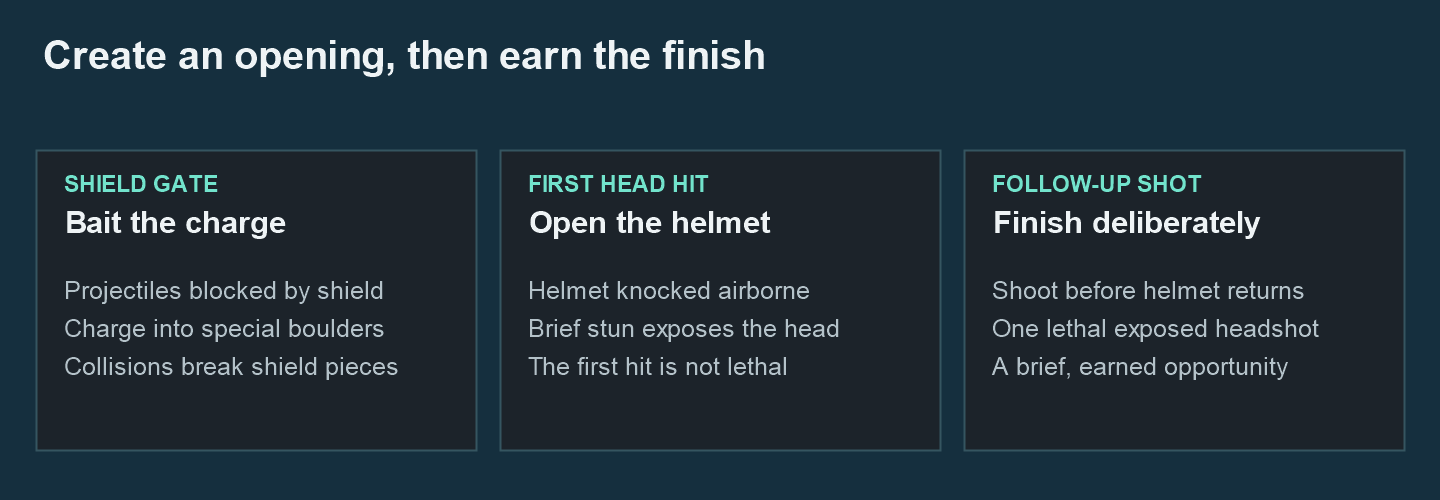
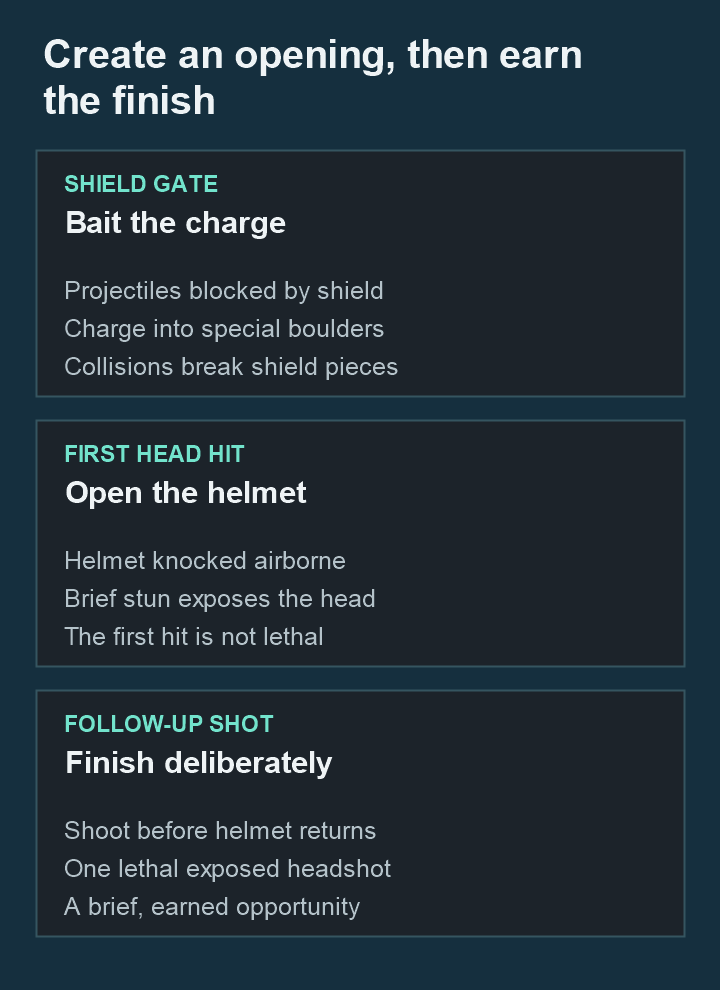
We refined the helmet interaction so that a head hit knocked it airborne and briefly stunned Goliath. The player had to land a follow-up shot against the exposed head before the helmet returned. The first hit created the opening; only the second was lethal.
I proposed a shield and placed special boulders in the arena. The shield blocked all incoming projectiles until removed. A hit or block triggered Goliath’s charge, giving the player a way to bait him toward a boulder and dodge out of the way. Each collision visibly broke pieces from the shield until it was gone.
Combining those interactions addressed both routes to an incidental victory: the shield prevented immediate access to the head, environmental baiting made its removal meaningful, and the returning helmet kept the final opening brief. The finish still came from a single lethal headshot.
3. Sheep Protection & Wave Balance
Changed the survival rules so that winning required protecting every sheep, then rebalanced the opening encounter around that responsibility.
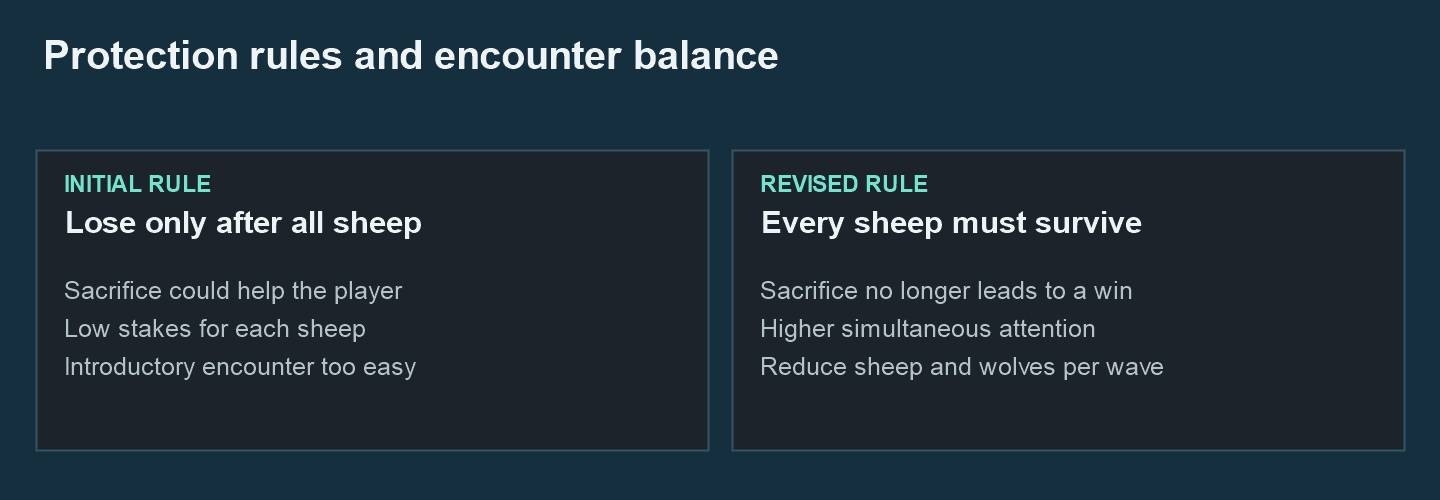
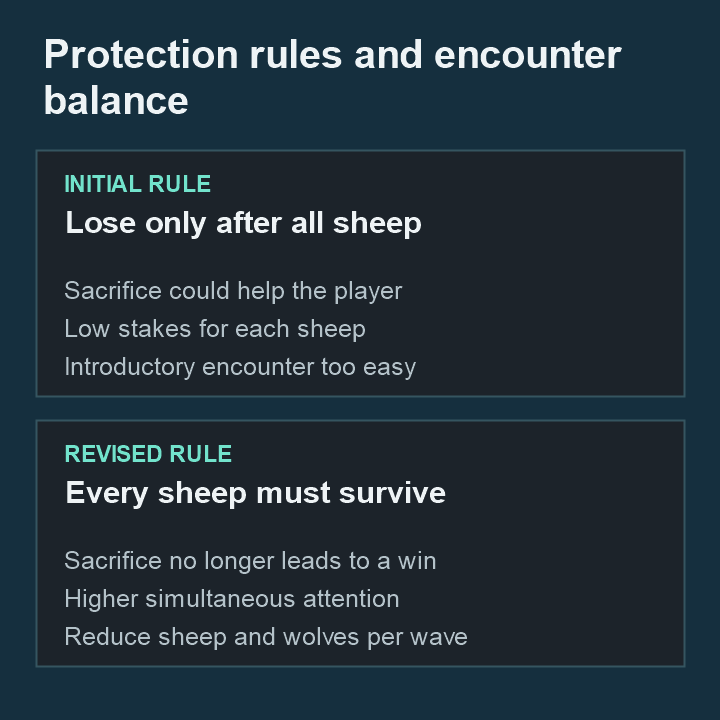
Result: Sacrificing a sheep no longer led to a win. After reducing the number of sheep and wolves per wave, the stricter rule produced a challenging introductory encounter.
Problem: Losing only when all sheep were gone made sacrificing one sheep an effective strategy and left the introductory level too easy.
Solution: Require every sheep to survive, then reduce the number of simultaneous sheep and wolves to make that responsibility manageable in the opening level.
Here is my process:
(3 phases; full breakdown below)
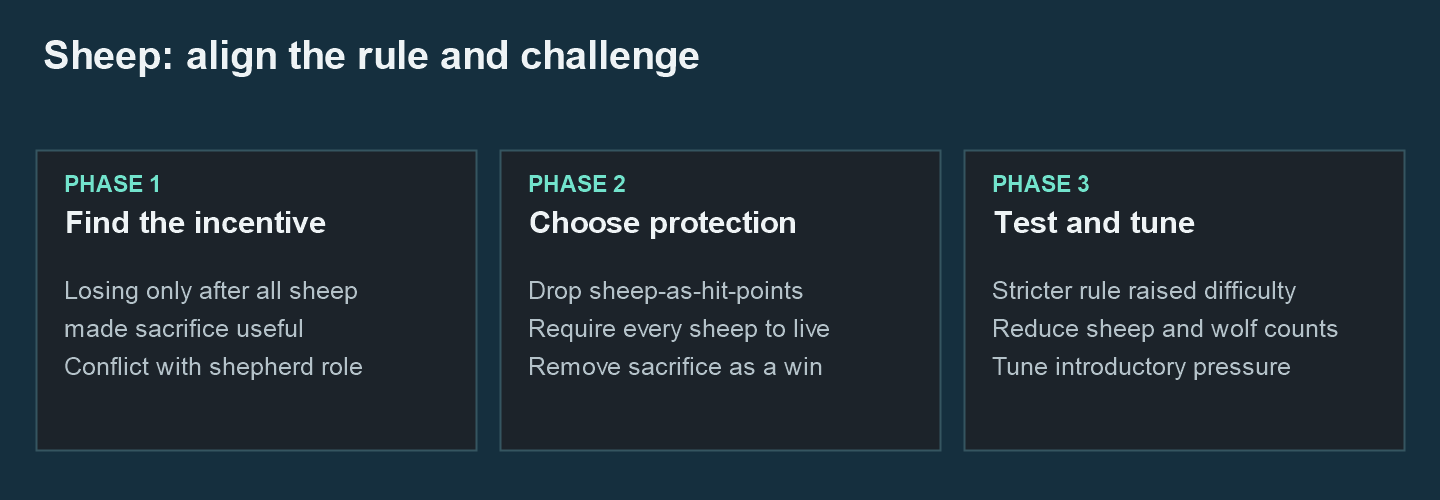
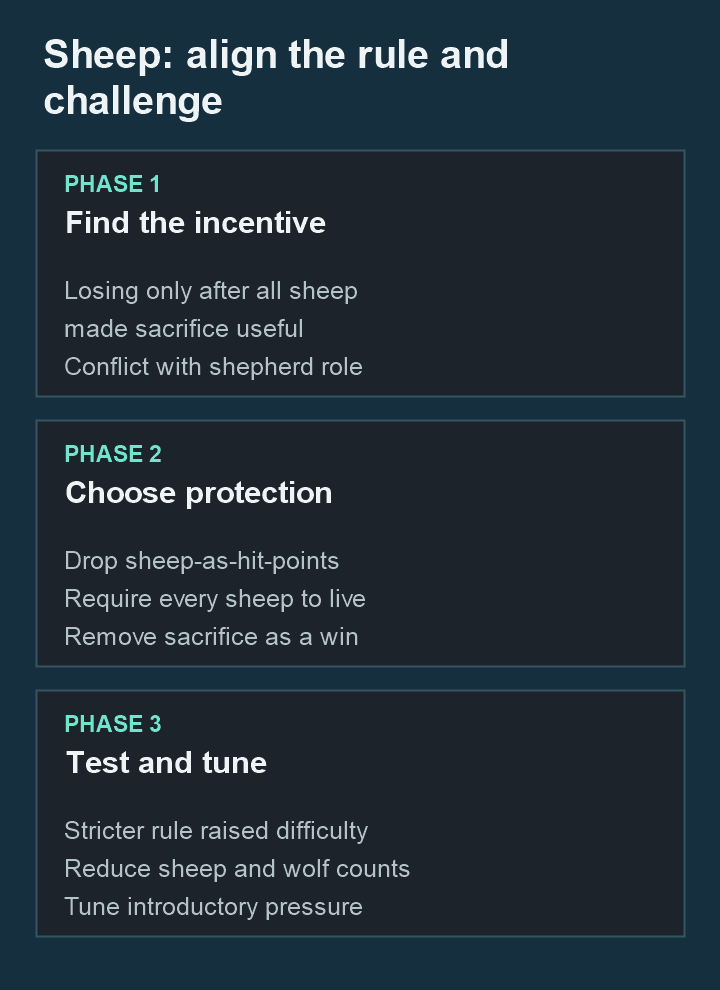
Phase 1: Identify the incentive problem
I designed the pasture as an introductory wave-survival level where players could gain confidence with the sling. Wolves primarily targeted the sheep, so protecting them was meant to drive the encounter.
The initial rule only caused a loss when every sheep was eaten or carried away. That made sacrificing one sheep a useful strategy and kept the stakes low. The winning strategy conflicted with the shepherd role.
Phase 2: Evaluate rules against the shepherd role
We had considered sheep as the player’s hit points, with sheep diving into damage to protect the player. That reversed the protection relationship, so we dropped it.
I proposed requiring every sheep to survive. That removed sacrifice as a route to victory and made each sheep matter. It also increased the amount of simultaneous attention the player needed to give the flock.
Phase 3: Test and tune the stricter rule
Testing confirmed that the every-sheep rule made the level harder. We reduced both the number of wolves per wave and the number of sheep the player had to track, then adjusted those values until the encounter was challenging and fun for an introduction.
We kept the meaningful rule and tuned the encounter around it, rather than restoring the low-stakes condition that had encouraged sacrifice.